
Access free Revision Notes, exam-style Mock Exams, and generate past paper questions with Testpapers, designed by Cambridge-certified teachers. Unlock Interactive Video lessons with topic-level Diagnostic Reports that show you exactly where to focus next.
 6 topics: 130 hours
 Cambridge CAIE 0625
 100% Online
Browse all 6 topics covered across IGCSE Level, with resources structured to guide your learning throughout the year.
Start with free revision resources and practice materials, or unlock the complete Learning Hub experience with interactive lessons, downloadable notes, and personalised learning support.
 Free + premium
Video lessons for every topic, with End-of-lesson quizzes and Diagnostic Reports.
Watch Interactive Videos >Free + premiumTeacher-made summarised notes for important topics. Available to download with Premium Plans.
Browse Revision Notes >FREETime-based exam-style questions with a personalised Diagnostic Report after every attempt.
Take a Mock Exam >In-app currency (Tutor Credits)Generate past paper questions, filter by year, session, and paper type. Mark Schemes included.
Generate Testpapers >In-app currency (Tutor Credits)Get exam-style evaluations and feedback from our Subject Tutors.
Connect with Tutor >Study with Interactive Videos, track your progress with Diagnostic Reports, generate targeted practice questions, and get support from expert Tutors.
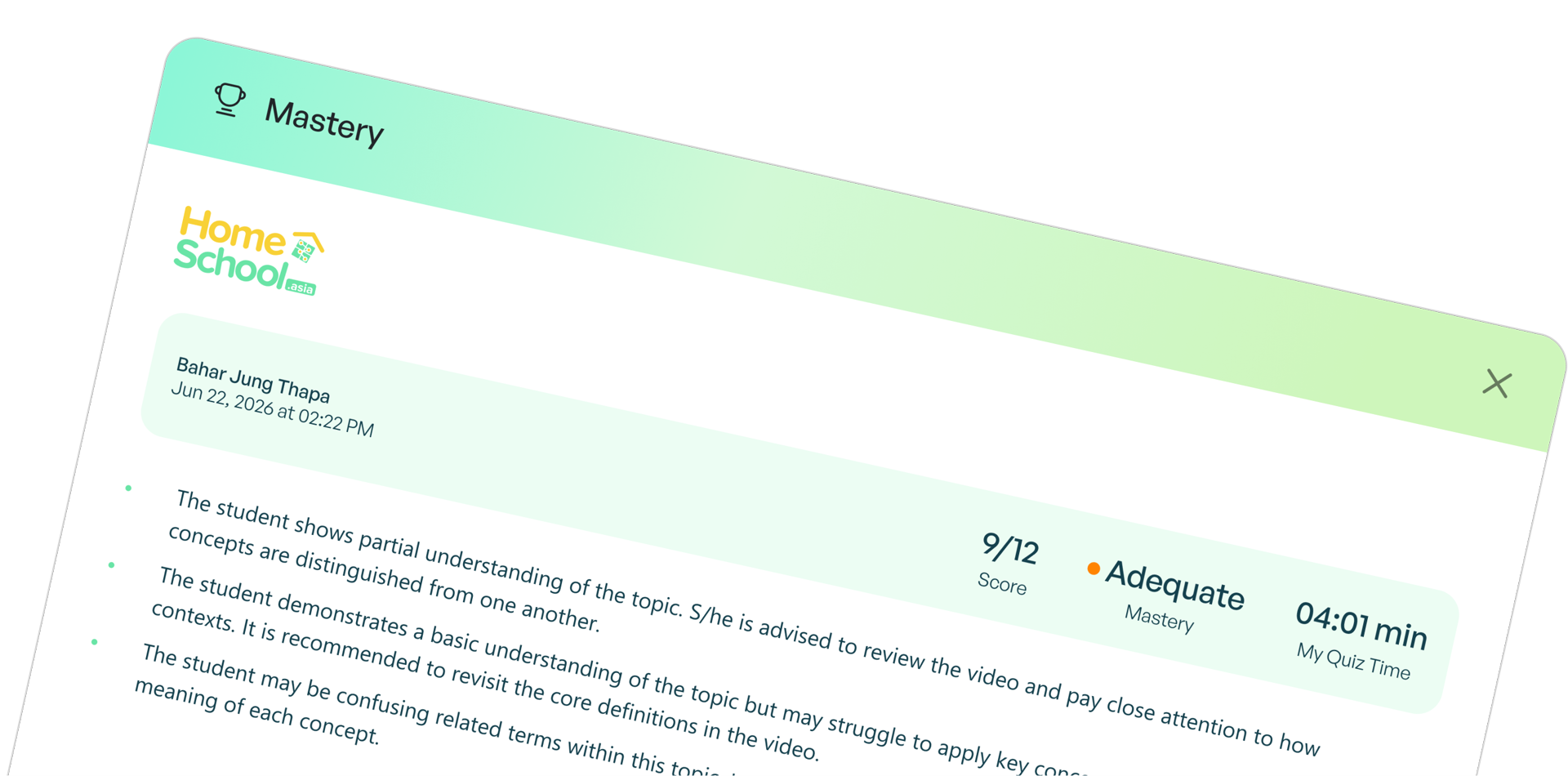
Track your progress, topic by topic, with personalised Diagnostic Reports, to identify your knowledge gaps and guide you towards Complete Mastery.
Denotes significant gaps in understanding of key concepts within the topic.
Indicates a solid understanding of the topic, with some areas still requiring improvement.
Shows a strong command of the topic and exam-level readiness.
Learn how Cambridge IGCSE Physics (0625) is assessed across the IGCSE qualification.
Paper 1
Multiple Choice (Core)
Paper 2
Multiple Choice (Extended)
Paper 3
Theory (Core)
Paper 4
Theory (Extended)
Paper 5
Practical Test
Paper 6
Alternative to Practical


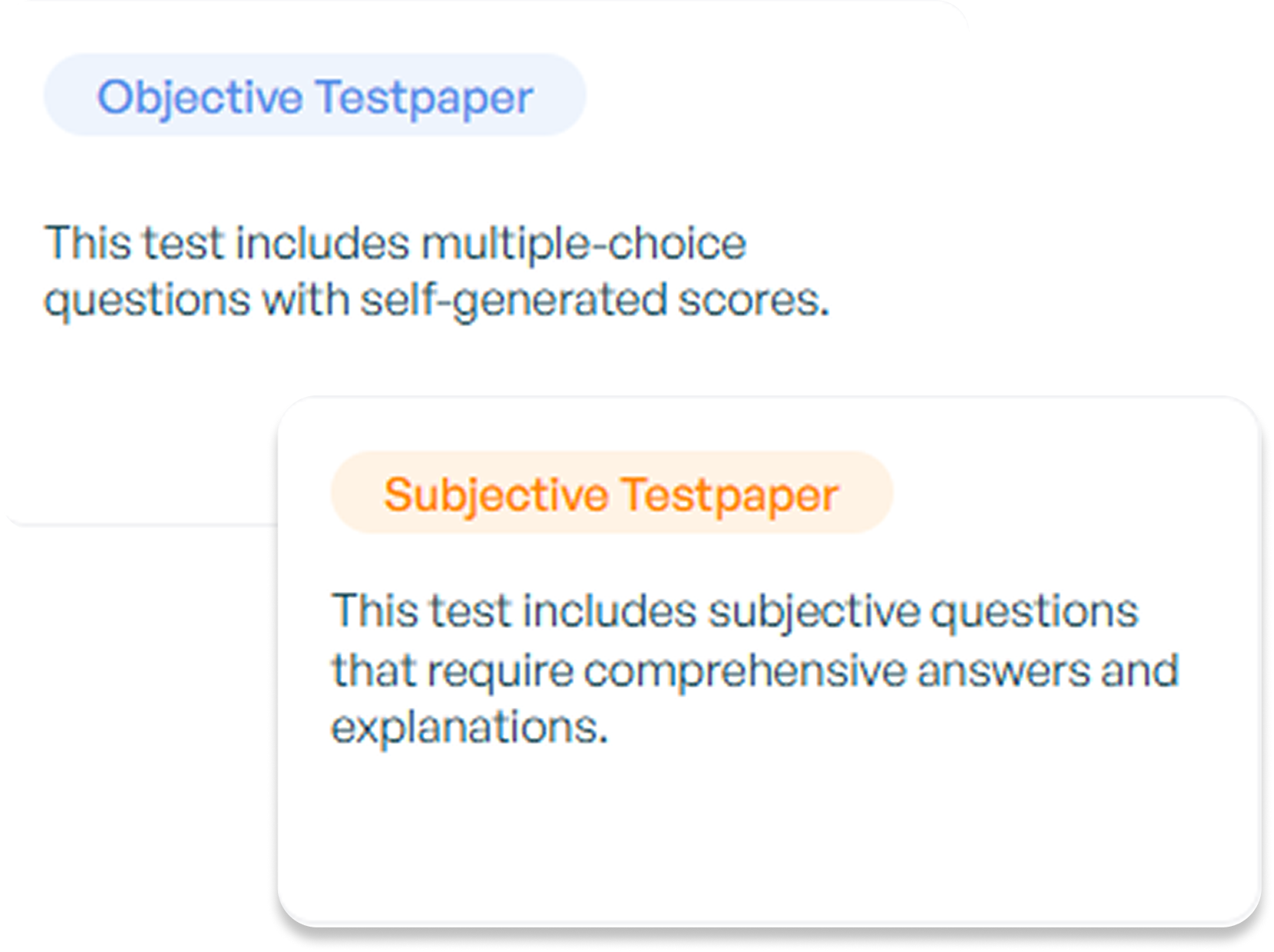
Create customised Testpapers with past paper questions to practice by paper type, topic, or difficulty level to match your learning objectives and assessment needs.
Begin with free resources or unlock more with our packages to start learning from your home.


It has up to 6 papers depending on tier and practical route. Core candidates sit Paper 1 (Multiple Choice) and Paper 3 (Theory), while Extended candidates sit Paper 2 (Multiple Choice) and Paper 4 (Theory). All candidates also complete either Paper 5 (Practical Test) or Paper 6 (Alternative to Practical).
Motion, Forces and Energy and Electricity and Magnetism tend to involve the most calculation-heavy questions, covering areas like speed, acceleration, force, work done, and circuit calculations involving current, voltage, and resistance. Thermal Physics also introduces calculations around specific heat capacity and latent heat. Since these formulas reappear across multiple question types, practising them in varied contexts is more useful than memorising them in isolation.
Whether you sit Paper 5 (Practical Test) or Paper 6 (Alternative to Practical), the focus is on your ability to take accurate measurements, identify patterns in results, and evaluate the reliability of an experimental method. The most effective preparation is working through past practical-style questions under timed conditions and paying close attention to command words like “state” and “explain,” since these signal exactly how much detail an answer needs.
Space Physics introduces foundational astronomy concepts such as the solar system, stars, and the structure of the universe, including basic ideas about orbital motion and the life cycle of stars. It’s a relatively self-contained topic compared to others in the syllabus, which makes it a good one to revise close to your exam since it doesn’t require building on multiple earlier chapters.
The Freemium Plan provides limited access to Interactive Videos and Diagnostic Reports for introductory chapters only. The Premium Plan unlocks all 6 topics, including full access to Interactive Videos, downloadable Revision Notes, Diagnostic Reports for every chapter, and additional Tutor Credits to generate Testpapers or get feedback from a Subject Tutor.