
Access free Revision Notes, exam-style Mock Exams, and generate past paper questions with Testpapers, designed by Cambridge-certified teachers. Unlock Interactive Video lessons with topic-level Diagnostic Reports that show you exactly where to focus next.
 21 topics: 130 hours
 Cambridge CAIE 0610
 100% Online
Browse all 21 topics covered across IGCSE Level, with resources structured to guide your learning throughout the year.
Start with free revision resources and practice materials, or unlock the complete Learning Hub experience with interactive lessons, downloadable notes, and personalised learning support.
 Free + premium
Video lessons for every topic, with End-of-lesson quizzes and Diagnostic Reports.
Watch Interactive Videos >Free + premiumTeacher-made summarised notes for important topics. Available to download with Premium Plans.
Browse Revision Notes >FREETime-based exam-style questions with a personalised Diagnostic Report after every attempt.
Take a Mock Exam >In-app currency (Tutor Credits)Generate past paper questions, filter by year, session, and paper type. Mark Schemes included.
Generate Testpapers >In-app currency (Tutor Credits)Get exam-style evaluations and feedback from our Subject Tutors.
Connect with Tutor >Study with Interactive Videos, track your progress with Diagnostic Reports, generate targeted practice questions, and get support from expert Tutors.
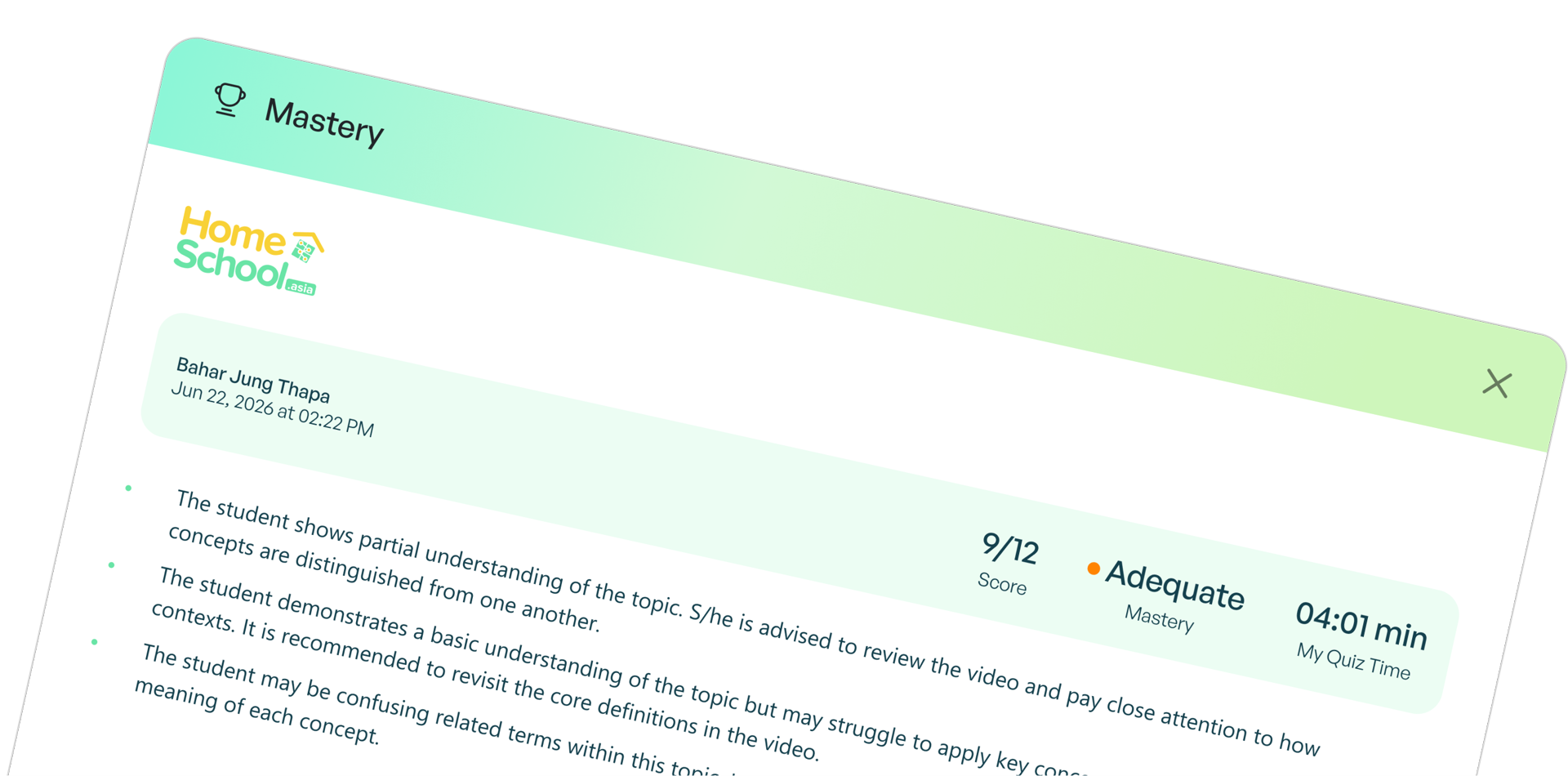
Track your progress, topic by topic, with personalised Diagnostic Reports, to identify your knowledge gaps and guide you towards Complete Mastery.
Denotes significant gaps in understanding of key concepts within the topic.
Indicates a solid understanding of the topic, with some areas still requiring improvement.
Shows a strong command of the topic and exam-level readiness.
Learn how Cambridge IGCSE Biology (0610) is assessed across the IGCSE qualification.
Paper 1
Multiple Choice (Core)
Paper 2
Multiple Choice (Extended)
Paper 3
Theory (Core)
Paper 4
Theory (Extended)
Paper 5
Practical Test
Paper 6
Alternative to Practical


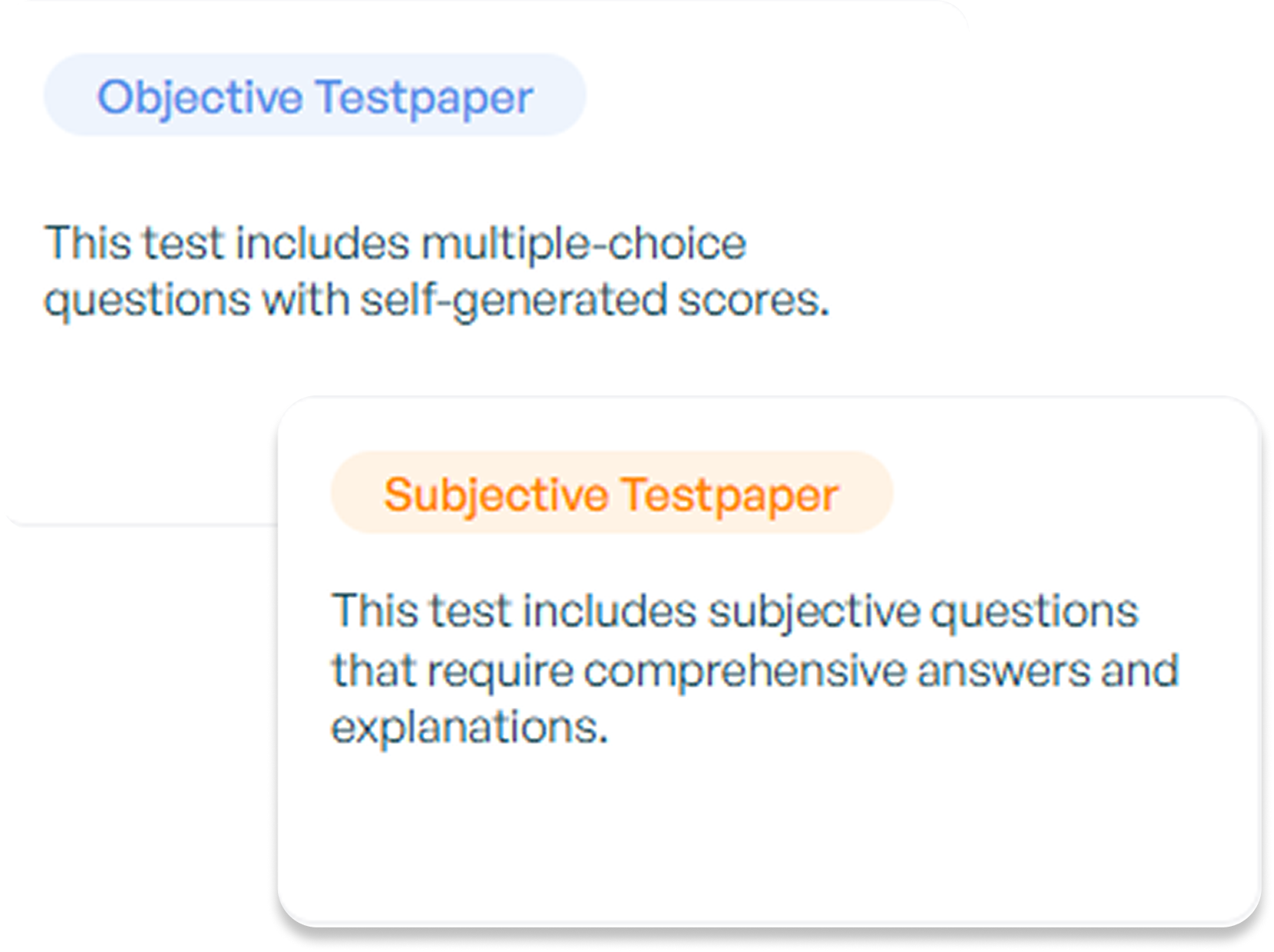
Create customised Testpapers with past paper questions to practice by paper type, topic, or difficulty level to match your learning objectives and assessment needs.
Begin with free resources or unlock more with our packages to start learning from your home.


This subject is generally considered one of the more content-heavy sciences at this level, since it spans 21 topics ranging from cell biology to ecology and genetics. Many students find topics like Coordination and Response, Inheritance, and Biotechnology and Genetic Modification challenging because they require connecting abstract processes to real biological systems. Breaking the syllabus into manageable topic-by-topic study, supported by diagrams and past paper practice, makes the volume of content far more approachable.
Paper 5 involves a hands-on practical examination where you carry out experiments and record real observations under exam conditions, while Paper 6 is a written paper that tests the same practical skills, like planning experiments and interpreting data, without requiring physical lab access. Schools choose which route their candidates take based on lab availability, so it’s worth confirming with your school or exam centre which paper you’ll be sitting.
It has up to 6 papers depending on your tier and practical route. Core candidates sit Paper 1 (Multiple Choice) and Paper 3 (Theory), while Extended candidates sit Paper 2 (Multiple Choice) and Paper 4 (Theory). All candidates also complete either Paper 5 (Practical Test) or Paper 6 (Alternative to Practical), depending on what their school offers.
Topics like Transport in Plants, Transport in Animals, Gas Exchange in Humans, and Coordination and Response rely heavily on labelled diagrams, since Cambridge frequently tests your ability to identify structures and explain their function together. Practising drawing and labelling key diagrams from memory, rather than just recognising them in a textbook, is one of the most effective ways to prepare for these questions.
Whether you’re sitting Paper 5 or Paper 6, practical skills are tested through your ability to follow methodical steps, record accurate observations or measurements, and evaluate the reliability of an experiment. The best preparation is working through past practical-style questions, paying close attention to command words like “describe” and “explain,” since vague observational language often costs marks even when the science is correct.
The Freemium Plan provides limited access to Interactive Videos and Diagnostic Reports for introductory chapters only. The Premium Plan unlocks all 21 topics, including full access to Interactive Videos, downloadable Revision Notes, Diagnostic Reports for every chapter, and additional Tutor Credits to generate Testpapers or get feedback from a Subject Tutor.