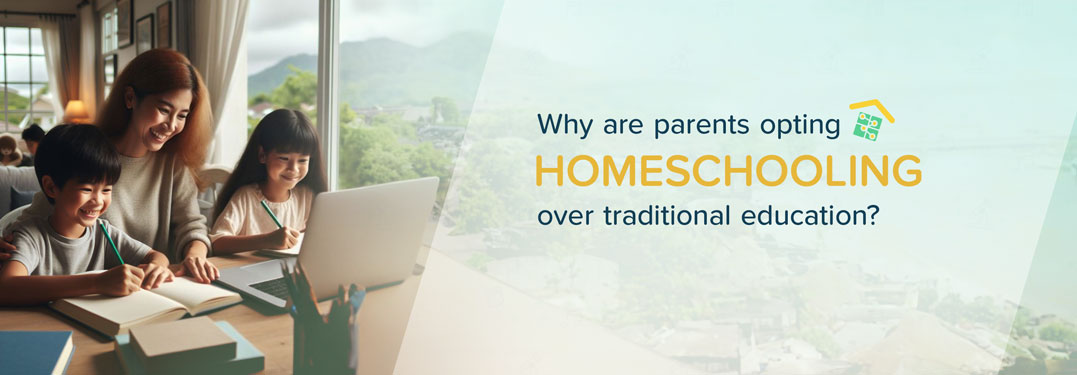
In a world where traditional education has been the standard for generations, an increasing number of parents are opting to take their children's education into their own hands. Homeschooling provides a customised learning journey that empowers children to flourish in a way that aligns with their unique needs, interests, and learning styles.
Unlike the rigid schedules and standardised curricula of traditional schools, homeschooling allows for an unmatched level of flexibility and personalisation in a child's education. This can involve adjusting the pace of learning, tackling subjects in a customised order, or incorporating real-world experiences into the curriculum.
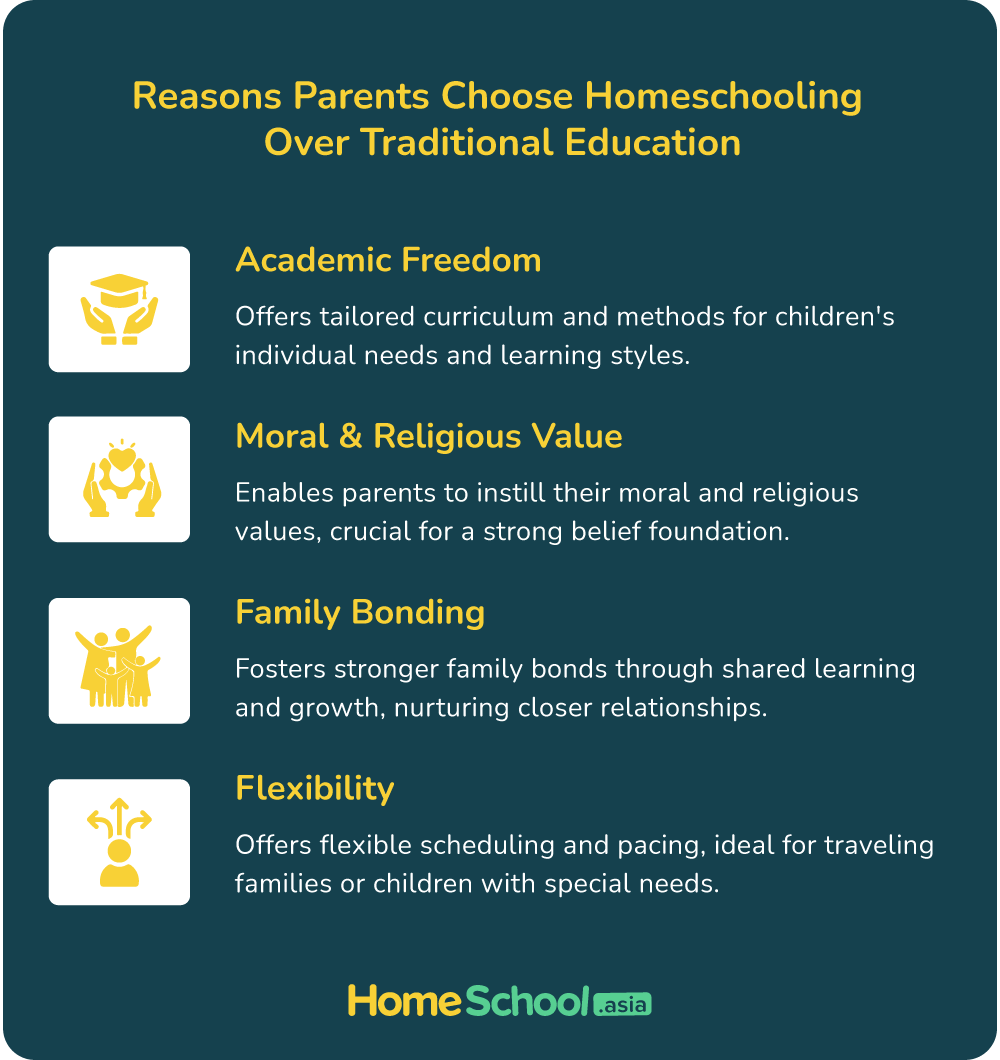
Apart from the flexibility and personalisation, there are many compelling reasons why parents choose homeschooling over traditional education. Some of the most common reasons include:
Academic freedom: Homeschooling gives parents the freedom to choose the curriculum and teaching methods that are best for their children. This can be especially beneficial for children with special needs or who learn best in a different setting or approach than what traditional schools follow.
Moral and religious values: It allows parents to teach their children their own moral and religious values. This can be important to parents who want their children to have a strong foundation in their beliefs.
Family bonding: It can help to strengthen family bonds. When parents and children spend more time together learning and growing, they develop closer relationships.
Flexibility: It is more flexible than traditional education. Parents can set their own schedule and pace of learning. This can be beneficial for families who travel frequently or who have children with special needs.
Hence, homeschooling enriches children's education by providing hands-on, experiential learning opportunities and fostering cultural awareness, language skills, problem-solving abilities, and independence. It also strengthens family bonds and offers flexibility in both learning and exploration.
Families can create a plan that seamlessly integrates their schedule into their children's curriculum, making learning engaging and memorable. The choice of homeschooling curriculum should align with the family's teaching style and their child's learning style, ensuring a well-rounded education.
Find the right homeschooling style while traveling
Discovering the ideal homeschooling style can be a rewarding journey for both children and parents, particularly when combined with the adventure of travel. The key lies in finding the perfect approach that suits everyone involved in this educational endeavour. So, have you ever contemplated the idea of educating your child while exploring the world?
Conclusion
The growing shift towards homeschooling is a powerful reflection of parents seeking a more personalised and meaningful educational experience for their children. As we've explored in the blog, the appeal of homeschooling lies in its core advantage of having the flexibility to adapt schedules and learning paces. Furthermore, it opens doors to experiential learning that extends far beyond the walls of a traditional classroom.
Although it presents significant benefits, it is important to acknowledge that this approach demands substantial commitment from the parents. Ultimately, it is a personal choice as there is no one-size-fits-all approach to education. It always depends on a family's unique needs, values, and circumstances. By carefully weighing these factors, parents can confidently choose the path that will best allow their children to thrive, learn, and grow, all from the comfort of their own home.
Frequently Asked Questions
Why is homeschooling better than traditional schooling?
Unlike traditional schools' rigid, one-size-fits-all approach, homeschooling tailors learning to a child's specific pace and interests, often leading to a deeper understanding and a greater love of learning. In that context, it provides a superior educational experience through personalised learning and a flexible schedule.
Why do parents choose to homeschool their children?
There are mainly three key reasons:
- Academic freedom to choose their own curriculum,
- Providing a more flexible learning pathway for their children, and
- Strengthening family bonds by providing a safe learning environment.
Do homeschooled kids perform better academically?
Yes, they generally perform better on tests like SATs, IGCSE & A Levels. The one-on-one instruction and the ability to customise their learning are significant factors in their academic success.
Are homeschooled kids happier?
Yes, generally homeschooled children tend to report higher levels of happiness and lower stress. This is because they can learn at their own pace, receive personalised attention, and avoid common negative school dynamics like social pressure and bullying.
What is the biggest challenge of homeschooling?
The main difficulty is how parents have to dedicate a significant amount of their time, resources, and responsibility to their children. Acting as both parent and teacher requires significant planning, patience, and resources. Therefore, maintaining a consistent social life and being an active part of their child's learning journey can be demanding.
Is it harder to get into college if you are homeschooled?
This is a common misconception regarding homeschooling, and the simple answer to this is no. Colleges and universities actively recruit homeschooled students. In fact, these applicants often stand out due to their unique experiences, self-motivation, and actually have a reputation for being independent and having critical thinking ability.
Are homeschoolers more successful in life?
Homeschooling environment deeply fosters key life skills such as independence, self-discipline, and critical thinking, making homeschoolers stand out from the crowd. Hence, homeschooled children tend to be equipped with all the qualities required to be successful in life.
Are homeschooled kids closer to their parents?
Yes, as homeschooled children mostly spend their time at home, and their parents are an active part in their learning journey, they grow together, which naturally strengthens their bonds.
Does homeschooling limit kids' perspectives?
Not necessarily. Although it is a valid concern, proactive homeschooling families easily provide diverse social interactions, as the flexibility allows the children to engage in extra-curricular activities like sports, arts, etc. This often results in a wider range of real-world experiences than a traditional classroom.
How do you find balance between homeschooling and traditional school?
A hybrid homeschool model offers the perfect balance. This approach allows children to attend a traditional school part-time for specific subjects or socialisation while benefiting from the personalised, flexible learning of homeschooling for the rest.